Before we arrive
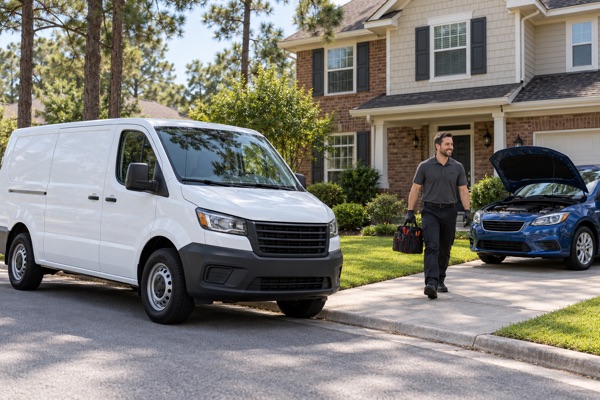
When you call, we ask for the year, make and model, and the VIN if it's handy. That's how we find the right glass for your car's camera, rain sensor and other features. We also ask where the car will be parked and whether there's a roof over it in case of rain. You get the price and a time window before anything is ordered.
Prep and removal
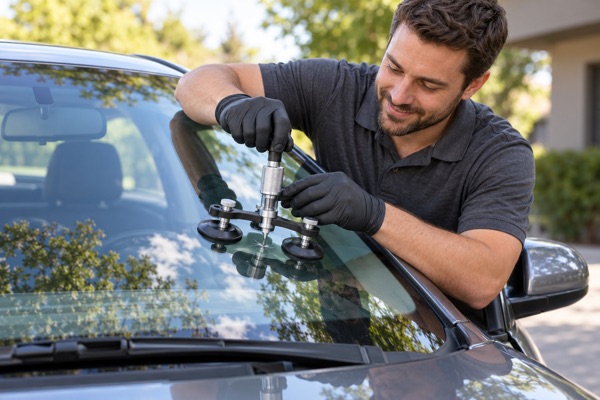
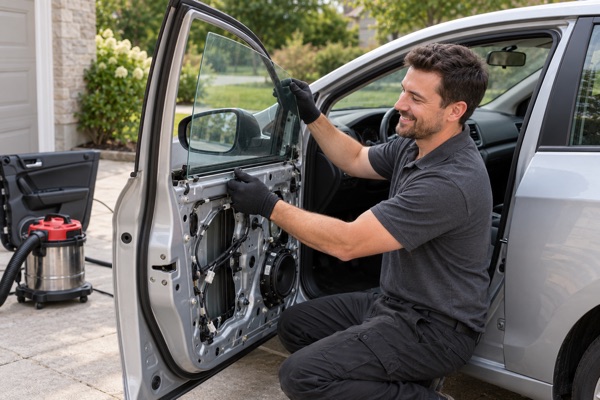
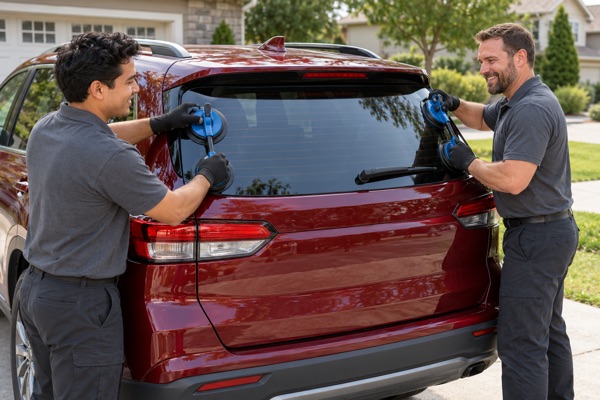
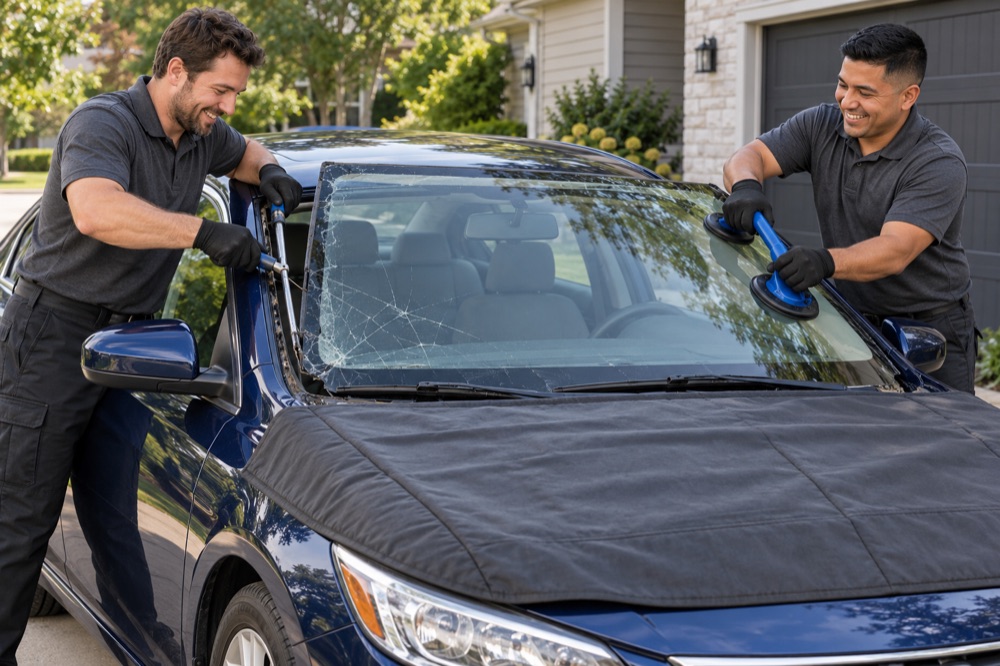
The technician checks the old windshield, the wipers and the mirror, and points out anything already damaged. Covers go over the hood, fenders and front seats. The wipers, cowl panel and moldings come off, and the old glass is cut free from its adhesive and lifted out with suction cups.
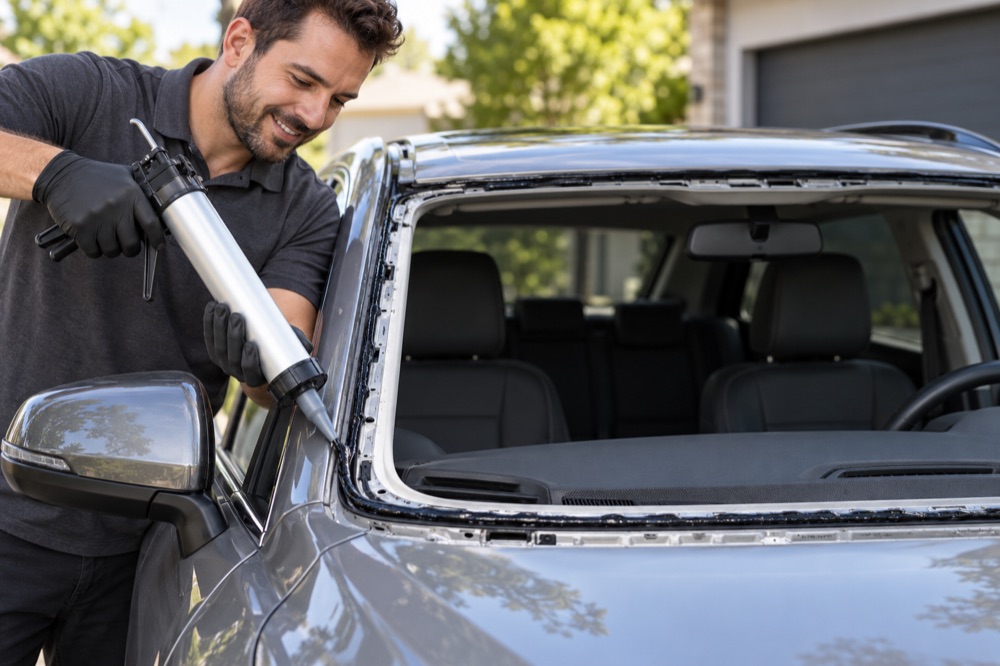 A fresh, even urethane bead around the frame
The new glass
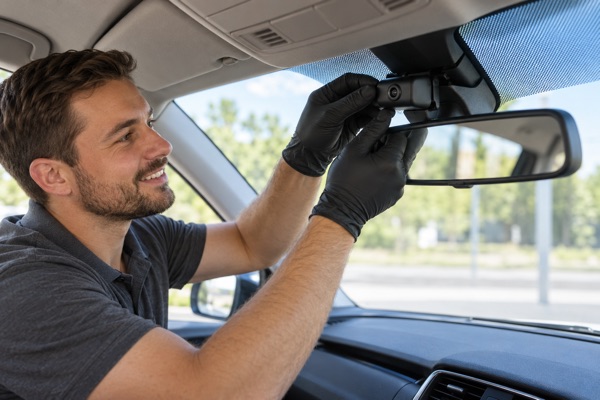
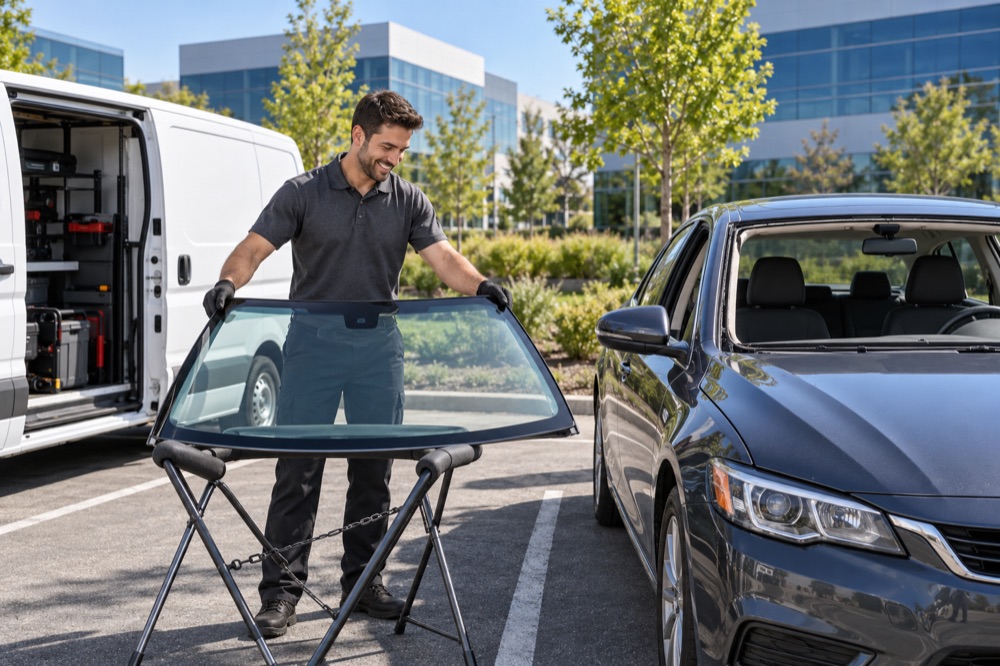
The frame is trimmed to a thin, even layer of the old adhesive, cleaned and primed wherever the paint is bare. A fresh bead of urethane goes around the opening. Two people set the new windshield straight onto the bead, press the molding into place and tape it down. The mirror, rain sensor and camera cover go back on, then the cowl and wipers.
Camera calibration
If your car has a forward camera, we calibrate it next. Some cars use a target set up in front of the bumper. Others need a guided drive on marked roads with a scan tool connected. We confirm the camera has accepted its new position before we finish.
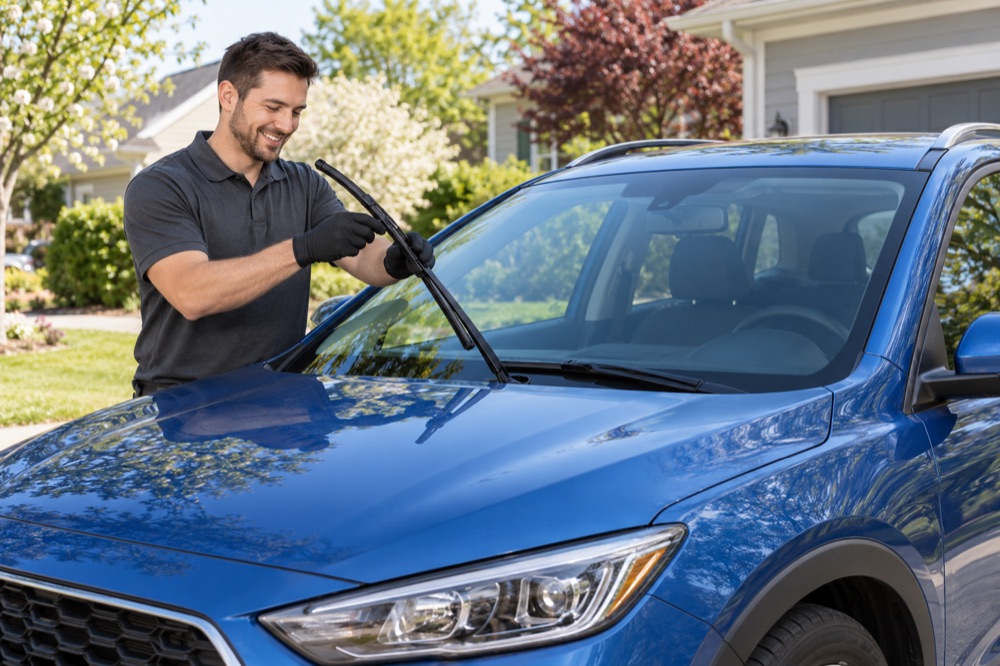 Wipers back on and checked before the keys go back
Drive-away time and aftercare
The urethane has to set before the car is safe to drive. The drive-away time depends on the adhesive and the day's temperature and humidity, and your technician tells you yours before leaving. For the first day, leave the tape on, close the doors gently, skip the car wash and crack a window if the car will sit in the sun.